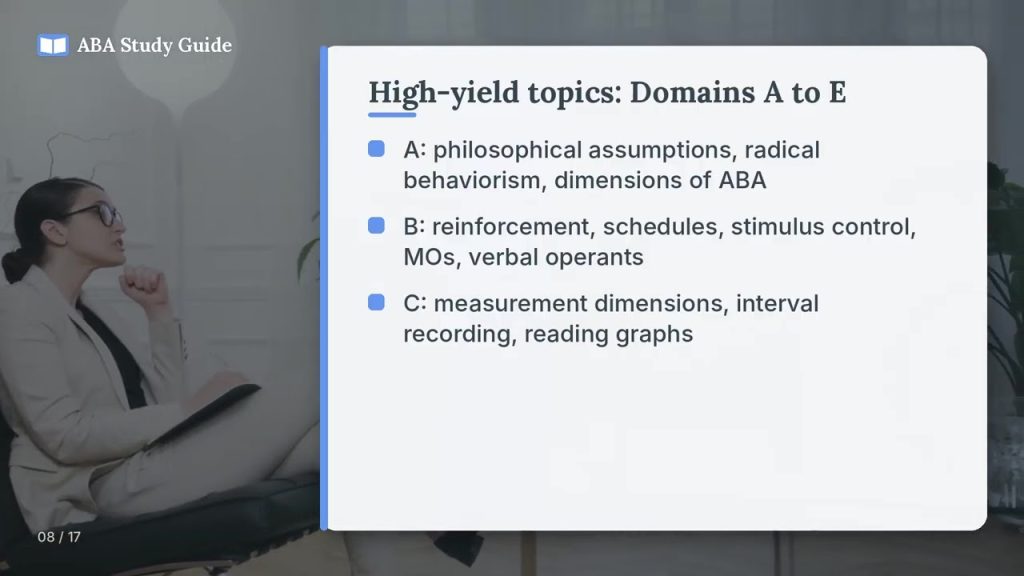
How to Pass the BCBA Exam in 2027: Pass Rates, 2027 Changes & a 12-Week Study Plan
Only 51% of first-time BCBA candidates passed in 2025. Learn what changes in 2027, what stays the same on the exam, and follow a 12-week BCBA study plan.
Study plans, exam updates, and strategies for passing the BCBA exam.
Only 51% of first-time BCBA candidates passed in 2025. Learn what changes in 2027, what stays the same on the exam, and follow a 12-week BCBA study plan.
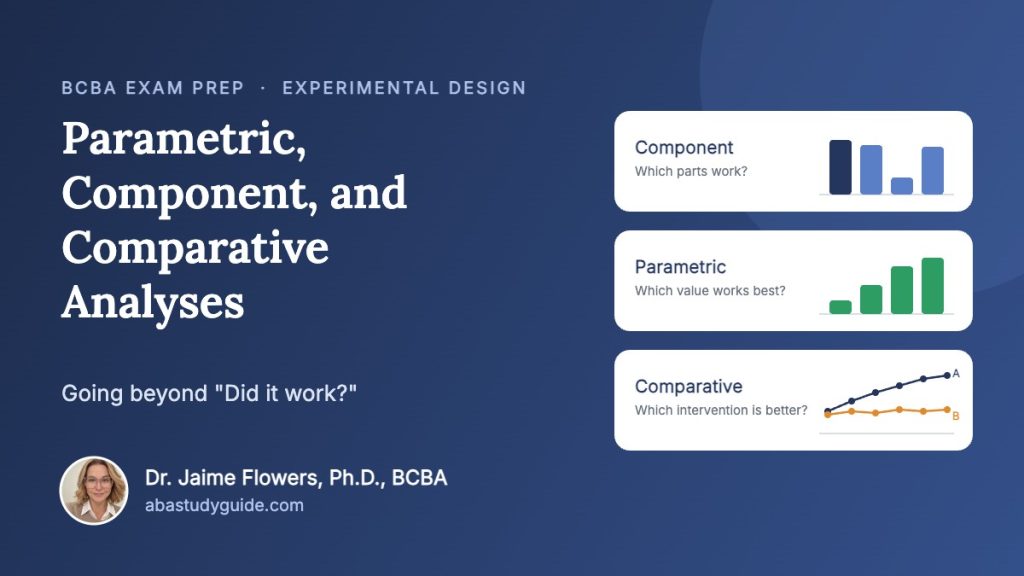
Component, parametric, and comparative analyses in ABA explained: drop-out vs. add-in, how to tell them apart, common designs, and BCBA practice questions.
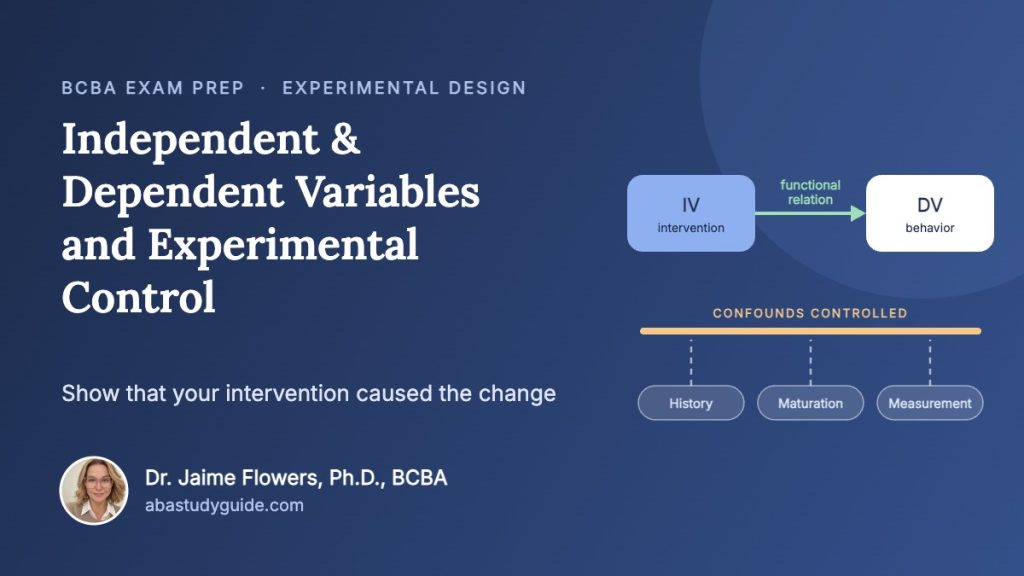
Independent vs. dependent variables in ABA, how to tell them apart, experimental control, confounding variables, and treatment integrity, with BCBA practice questions.
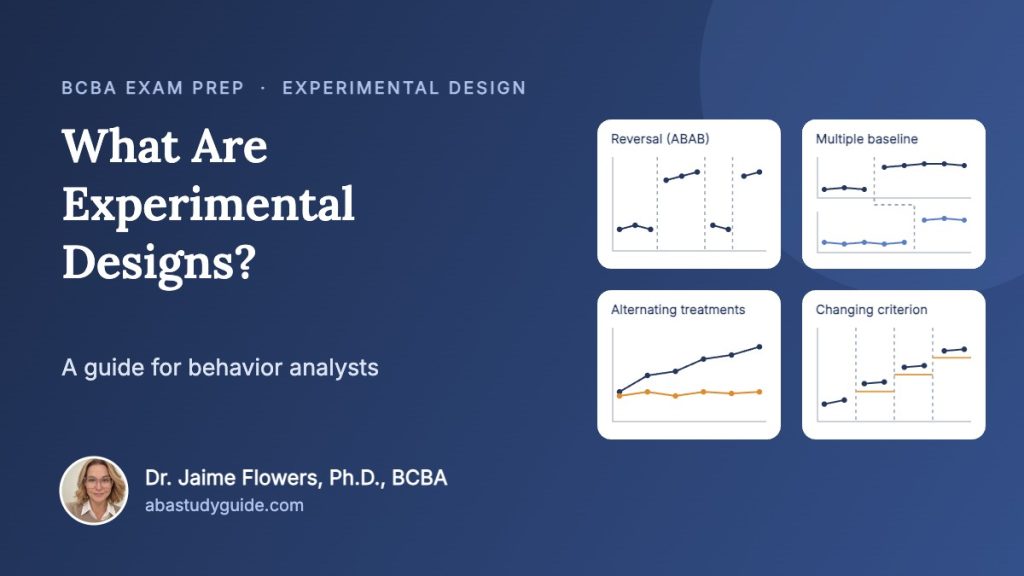
Single-case experimental designs explained: baseline logic, reversal, multiple baseline, alternating treatments, changing criterion, and how to choose, with BCBA practice.
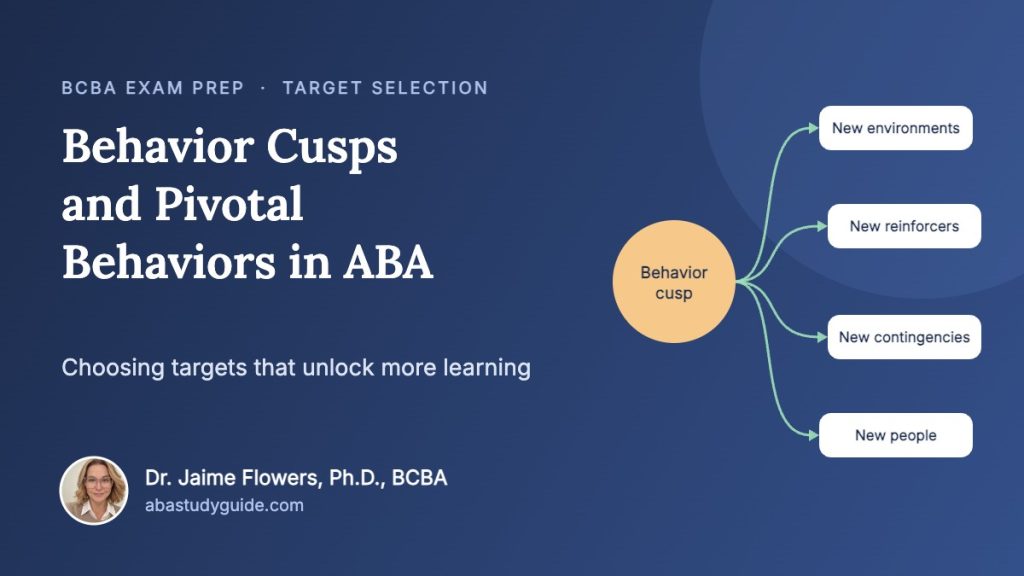
What behavior cusps and pivotal behaviors are, how they differ, the Bosch and Fuqua criteria, PRT pivotal areas, and BCBA exam practice questions.
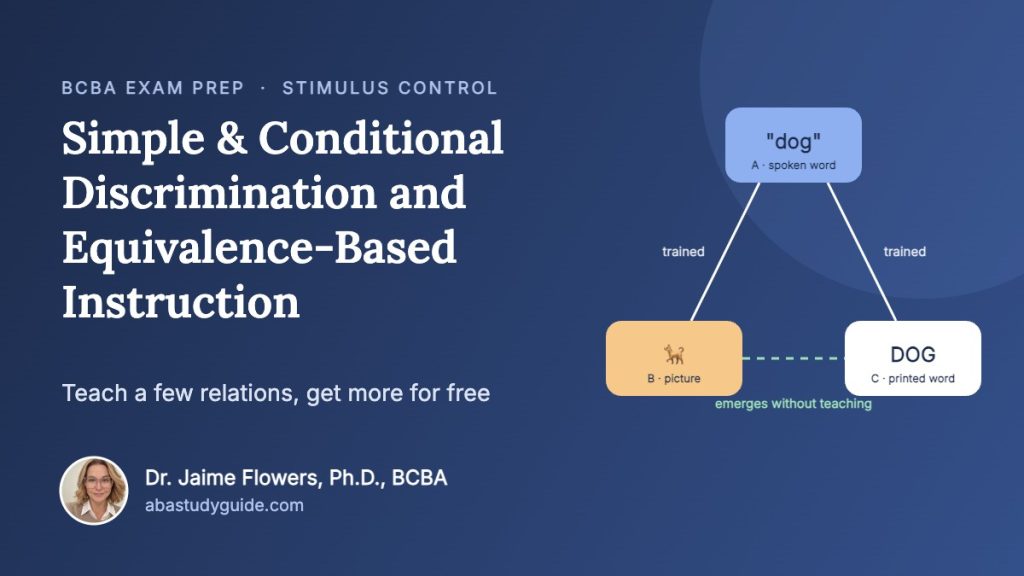
Simple vs. conditional discrimination, match-to-sample, stimulus equivalence (reflexivity, symmetry, transitivity), and equivalence-based instruction, with BCBA practice.
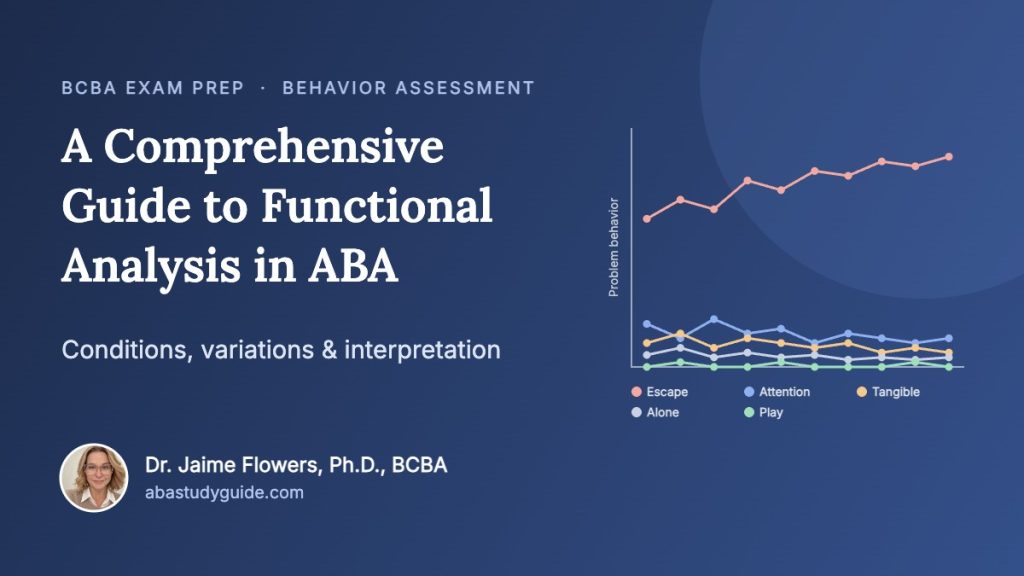
Functional analysis in ABA explained: standard conditions, how to run and interpret an FA, variations like trial-based, latency-based, and IISCA, safety, and BCBA exam tips.
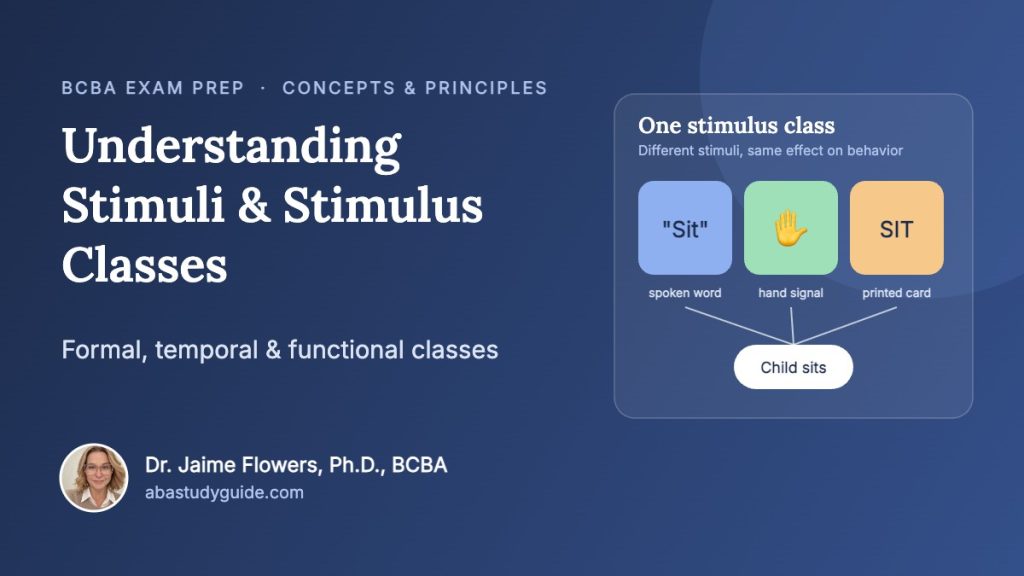
What a stimulus is in ABA, the three ways to classify stimuli (formal, temporal, functional), feature vs. arbitrary stimulus classes, and BCBA exam practice.
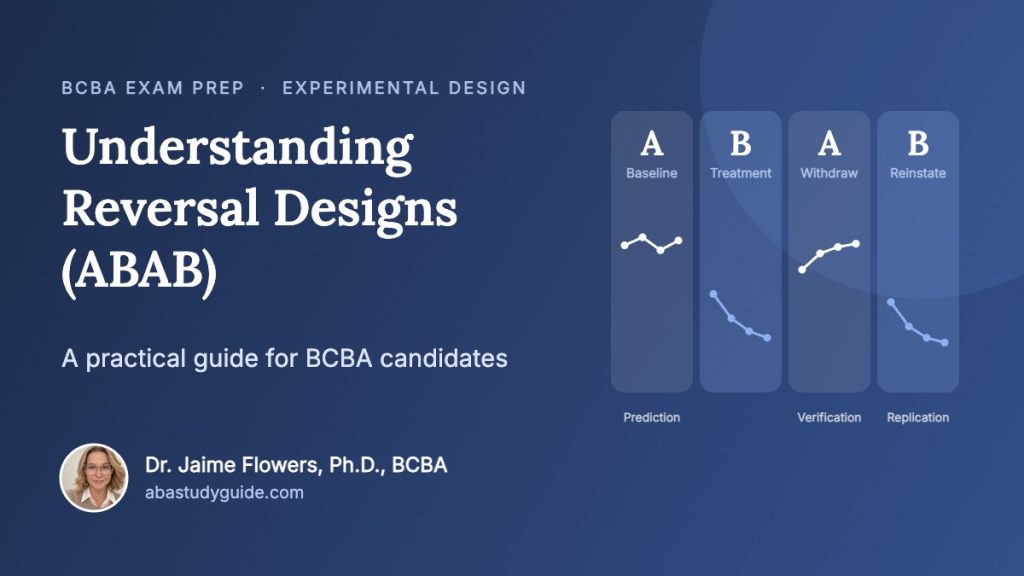
Reversal (ABAB) designs explained: how they show experimental control, variations like A-B-A, B-A-B, and DRO reversals, when to use them, and BCBA exam tips.
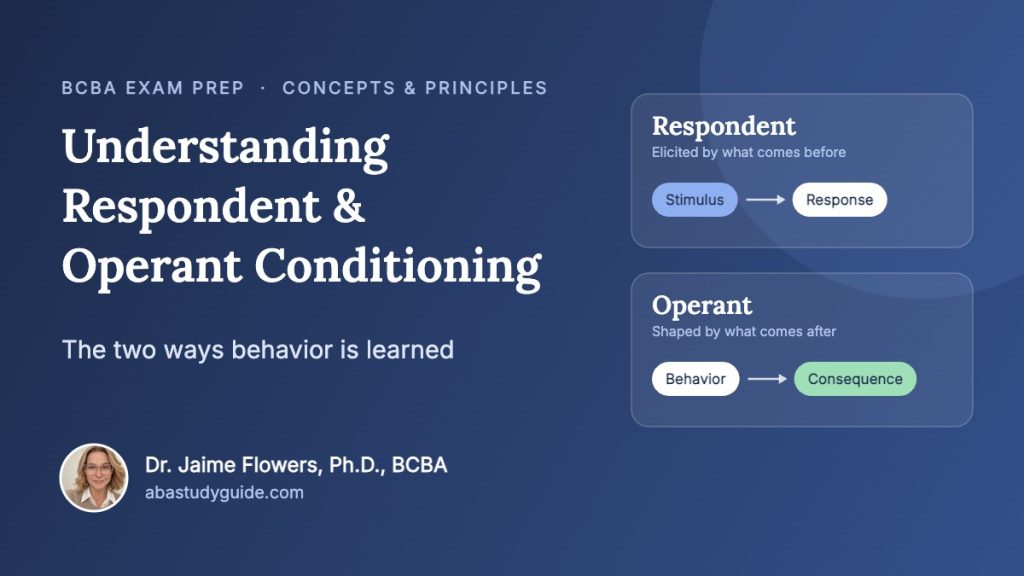
Respondent vs. operant conditioning explained: US, UR, CS, and CR, reinforcement and punishment, operant vs. respondent extinction, examples, and BCBA exam practice.